Understanding the difference Between Bhutan Paralympic and Special Olympic bhutan
Understanding the two major disability-sport organizations in Bhutan is important for athletes, families, schools, and communities. Both organizations support persons with disabilities, but they serve different groups, follow different international structures, and offer different types of sports programs.
- Bhutan Paralympic Committee (BPC)
The Bhutan Paralympic Committee, established in 2017, is the national body responsible for promoting and developing para-sports in Bhutan. It is recognized by the International Paralympic Committee (IPC) and works to support persons with physical disabilities through high-performance sports.
BPC’s mission is to empower athletes, build skills, promote independence, and create pathways for Bhutanese para-athletes to compete internationally. The committee aims to inspire the nation with the message: “Disability is not inability.”
Category of Disabilities Under BPC
BPC focuses on athletes with physical impairments, including both visible and non-visible disabilities.
Recognized Paralympic classifications include:
- Leg Length Difference
- Spinal cord injuries / wheelchair users
- Visual impairments (blind & low vision)
- Cerebral palsy / neurological impairments affecting movement
- Short stature (dwarfism)
- Limb deficiency)
- Hypertonia
- Ataxia
- Athetosis
- Muscle weakness / impaired muscle power
- Passive Range of Movement
- Intellectual Impairment
Note: Intellectual disabilities are not included under the Paralympic category unless part of very rare IPC events.
Active Sports Under the Bhutan Paralympic Committee
BPC currently focuses on developing and promoting competitive para-sports. Sports may expand over time, but the primary active sports include:
Current or Emerging Para-Sports in Bhutan
- Para-Athletics
- Para-Archery
- Para-Badminton
- Para-Shooting
- Para-Swimming
- Para-Table Tennis
- Boccia (emerging)
- Goalball (emerging)
These sports are aligned with international Paralympic pathways.
What Paralympic Athletes Do
Paralympic athletes undergo structured, high-performance training designed for Regional and International competitions.
They compete in major events such as:
- Paralympic Games
- Asian Para Games
- Asian Youth Para Games
- World Championships
- South Asian Regional Competitions
- IPC-sanctioned qualifiers and tournaments
Key Point:
Paralympic sports emphasize elite competition, professional coaching, and a pathway to global sporting events.
- 2. Special Olympics Bhutan (SO Bhutan)
Special Olympics Bhutan is part of Special Olympics International, a global movement dedicated to supporting people with intellectual disabilities.
SO Bhutan focuses on inclusion, participation, and joy in sports—not high-performance competition.
Special Olympics builds confidence, social skills, teamwork, and community involvement through regular sports activities and unified programs.
Category of Disabilities Under Special Olympics
Special Olympics is for individuals with: Intellectual disabilities
These are individuals whose intellectual functioning and adaptive skills may affect learning, communication, and daily living.
Note: Special Olympics does not classify athletes by physical disabilities unless combined with intellectual disability.
Active Sports Under Special Olympics Bhutan
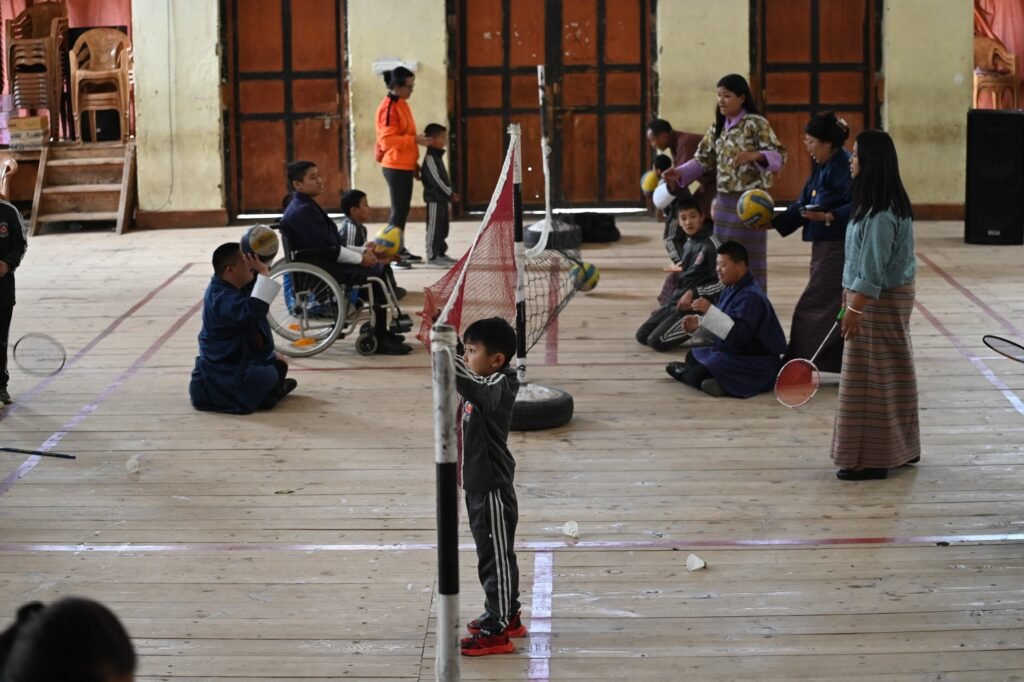
SO Bhutan offers community-based and school-based sports activities, focusing on participation, fun, and inclusion rather than elite competition.
Common Sports Offered
- Athletics
- Football
- Basketball
- Boccia
- Badminton
- Floorball / Unified sports programs
- Health & fitness programs
Special Olympics also has Unified Sports, where athletes with and without disabilities play together.
What Special Olympics Athletes Do
Athletes participate in training sessions, local competitions, and Special Olympics events such as:
- Special Olympics National Games
- Special Olympics World Games
- Unified sports tournaments
- Community inclusion programs
- Youth leadership
Key Point:
Special Olympics focuses on participation, inclusion, and personal development, not elite performance.
- Main Differences Between BPC & Special Olympics Bhutan
Topic | Bhutan Paralympic committee (BPC) | Special Olympic (SO Bhutan) |
Type of disability
| Physical impairments | Intellectual impairment |
Main goal | Elite sports development & international competition | Inclusion, participation & community sports
|
International body | International Paralympic Committee (IPC) | Special Olympics International
|
Competition level | High-performance, competitive | Community-based, inclusive |
Examples of sports | Para-athletics, Para-archery, wheelchair basketball | Athletics, football, basketball, boccia
|
Skill classification | Strict classification systems | No strict performance classification |
Pathway | Paralympic Games & Asian Para Games | Special Olympics World Games
|
- How to Know Which Pathway You Belong To
✔ Physical disability (visible or non-visible) → Bhutan Paralympic Committee (BPC)
✔ Intellectual or learning disability → Special Olympics Bhutan (SO Bhutan)
If a person has both physical and intellectual disabilities, the organizations will guide them to the most appropriate pathway.
If unsure, individuals can contact either BPC or SO Bhutan for an assessment.
- Joining the Bhutan Paralympic Committee
If you are a person with a physical disability—or if you know someone—BPC welcomes you to explore sports and build confidence.
How to join:
- Visit the BPC office
- Call or message the committee
- Fill out a basic registration form
- Get assessed to identify suitable sports
At BPC, you become part of a family that believes in your talent and potential. Together, we work to break barriers and build a proud generation of Bhutanese para-athletes.